
View Menu


Date: 07/07/2026
The NIHR HealthTech Research Centre in Long-Term Conditions, Devices for Dignity (D4D), welcomes the publication of draft NICE guidance recommending pregnancy-specific hybrid closed-loop (HCL) systems for people with Type 1 Diabetes who are pregnant or planning a pregnancy.
Often referred to as an "artificial pancreas", an HCL system combines continuous glucose monitoring, an insulin pump and a dosing algorithm to automatically adjust insulin delivery in response to glucose levels. Pregnancy-specific HCL systems are designed to support the tighter glucose targets and rapidly changing insulin requirements associated with pregnancy.
For D4D, this guidance reflects an important shift towards more personalised health technologies, where innovation is developed and evaluated for the needs of specific populations and life stages. It sits at the intersection of two of our core clinical themes: Diabetes and Women's Health.
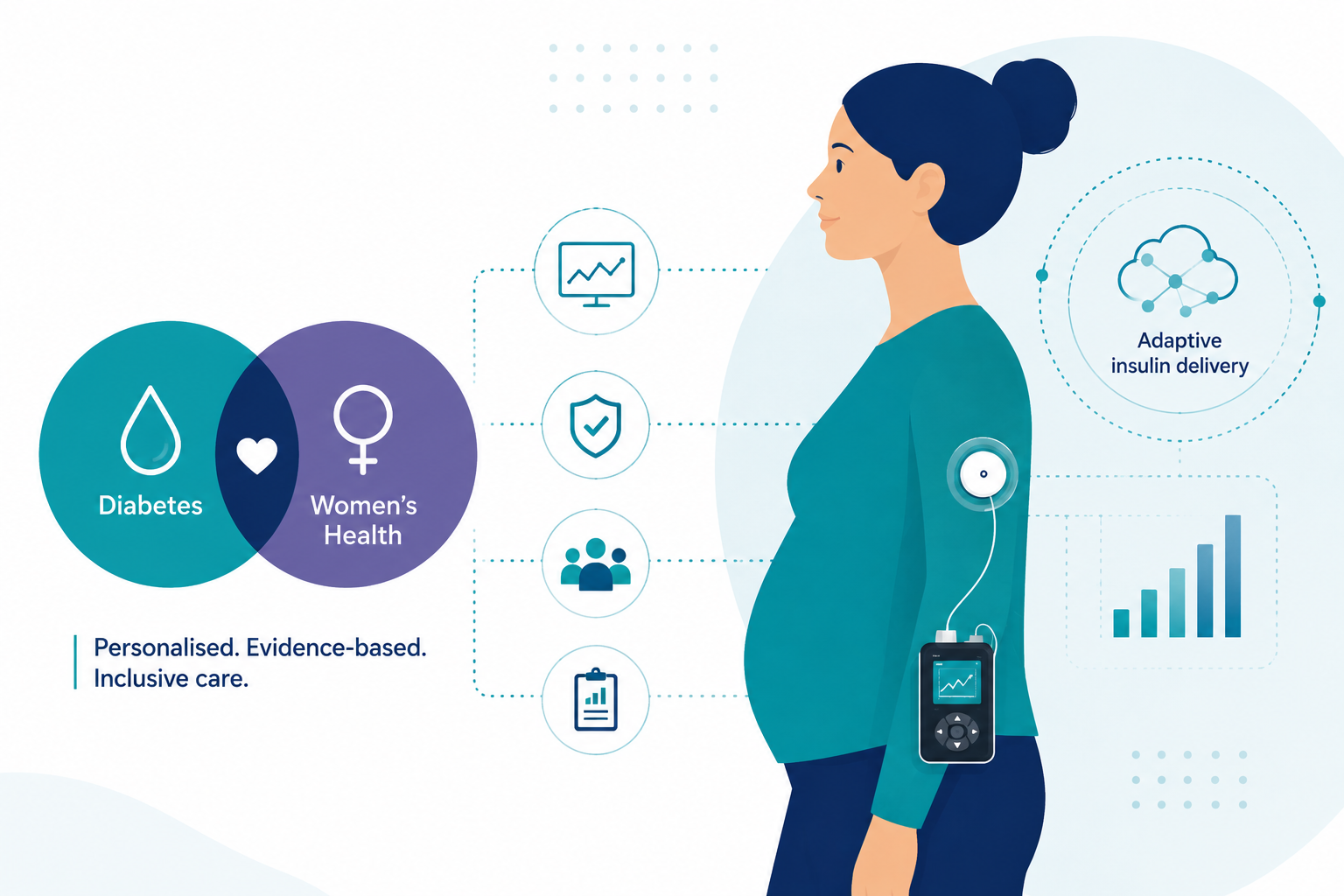
Our Diabetes theme focuses on making diabetes self-management easier, more sustainable and more responsive to individual needs. Pregnancy presents unique challenges for people living with Type 1 Diabetes, with changing insulin sensitivity throughout pregnancy and tighter requirements for glucose targets than those used outside pregnancy.
The draft guidance reflects a growing evidence base showing that pregnancy-specific HCL systems can help people increase their time within recommended glucose target ranges during pregnancy. It marks an important evolution in HCL technology, with algorithms designed to support the distinct physiological demands of pregnancy rather than applying a one-size-fits-all approach.
Pregnant women have historically been underrepresented in clinical research, meaning many medicines and medical technologies have entered clinical practice with limited evidence specific to pregnancy. As a result, clinicians and patients have often relied on technologies developed and validated in the wider Type 1 Diabetes population, despite the distinct physiological demands of pregnancy.
By recommending pregnancy-specific HCL systems from pre-conception planning through pregnancy and into the postnatal period, NICE recognises that diabetes management is a continuous journey rather than a series of isolated clinical episodes. This represents an important step towards more equitable, evidence-based innovation in women's health.
At D4D, we believe successful health technology innovation depends not only on technical performance, but on generating robust evidence in the populations who will ultimately use it.
The draft guidance also reinforces that successful implementation extends beyond the technology itself. Education, specialist multidisciplinary support and equitable access will be essential to ensuring these systems deliver meaningful benefits for people and families across the NHS.
As an NIHR HealthTech Research Centre, D4D remains committed to supporting the development, evaluation and adoption of evidence-based health technologies that improve outcomes for people living with long-term conditions.
Read more about this topic here: NICE issues new guidance on 'artificial pancreas' technology for pregnant women with type 1 diabetes | NICE